
AECS Insights / OB/GYN ultrasound
How to choose an OB/GYN ultrasound course for doctors
An OB/GYN ultrasound course can mean an introductory theory programme, a focused update on one area, or a practical course with supervised scanning. The same broad title may cover very different levels and topics. Before enrolling, decide whether you need to understand principles, interpret images more consistently, perform scans under supervision, improve reporting, or build a longer pathway to independent practice.
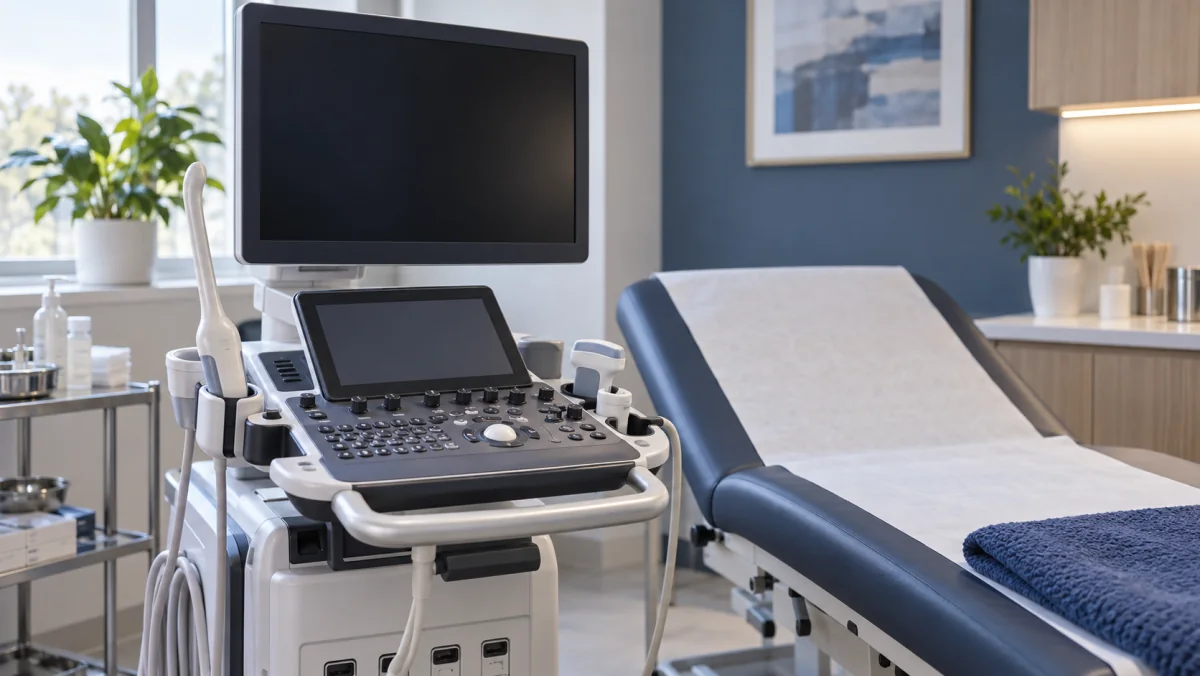
This guide helps doctors compare educational offers. It does not teach scanning technique, diagnose patients or claim that a short course grants permission to scan independently. Your current specialty, prior experience, local rules and clinical governance determine which training pathway is appropriate.
Establish your starting level
Begin with what you already do. Do you perform obstetric or gynaecological scans, review images produced by others, or use ultrasound findings in multidisciplinary decisions? Have you received supervised training and feedback, or mainly learned from lectures and observation? What examinations are within your current scope, and which would be new?
Write down two or three learning goals that can be checked. “Improve ultrasound” is too broad. “Recognise when image quality is insufficient and know when to seek senior review” is a more useful educational objective. “Produce a complete, well-documented examination under supervision” is different again. Share your starting level with the organiser and ask whether the course is designed for it.
Do not assume that an “advanced” label guarantees a better fit. A course can be advanced in one topic and introductory in another. A strong foundation may be more valuable than a catalogue of complex cases if the learner has not yet had structured basic training.
Separate obstetric and gynaecological goals
OB/GYN ultrasound is not a single task. Obstetric and gynaecological scanning involve different clinical questions, patients, image interpretation and reporting requirements. A course may cover both, or concentrate on a narrower domain. Ask for a session-by-session syllabus and the intended outcome of each component.
Look for a clear distinction between anatomy and physics teaching, image acquisition, interpretation, documentation and communication. A course that includes many images may be valuable for interpretation but offer little individual scanning practice. Conversely, a practical workshop may offer scanner time without enough structured review of how findings are recorded and discussed. Both sides matter in professional practice.
ISUOG’s Basic Training programme offers one professional example of separating theoretical and practical components in OB/GYN ultrasound education. It is not evidence that an AECS course follows ISUOG’s curriculum or grants its certificate. Use the example to ask how a proposed course connects its different parts.
Compare named curriculum areas with your learning goal
The ISUOG Basic Training Online Program provides one professional reference for topic breadth. Its published modules include ultrasound foundations and safety, early-pregnancy assessment, fetal anatomy and growth, Doppler principles, gynaecological examination of the uterus, ovaries and adnexae, and report writing. These are reference topics to evaluate, not verified inclusions, credits or standards for the AECS course.
Swipe horizontally to view all columns.
| If your goal is… | A relevant curriculum area to look for | Check the level of learning |
|---|---|---|
| Build a safe foundation | Physical principles, image quality and safety | Is the learner explaining limits or only memorising controls? |
| Improve obstetric interpretation | Early pregnancy, fetal anatomy/growth or Doppler principles as appropriate | Are examples discussed and interpretations reviewed? |
| Improve gynaecological interpretation | Uterine, ovarian and adnexal anatomy | Are images linked to reporting and uncertainty? |
| Improve practical scanning | Supervised acquisition and feedback | Does each delegate scan, or only watch a tutor? |
| Improve communication | Recording findings and writing reports | Is the learner’s report reviewed against stated criteria? |
For each relevant topic, “covered” might mean a lecture, image-interpretation exercise, tutor demonstration or supervised delegate practice. A timetable should distinguish those activities. AIUM’s obstetric practice-parameter page is another context-specific clinical practice reference; it does not set a universal legal standard or endorse AECS.
Understand the value and limits of online theory
Online instruction can be effective for basic principles, systematic interpretation, case review and preparation for practical sessions. It allows a learner to revisit difficult examples. Live discussion can help clarify why an image is or is not adequate. These are legitimate educational benefits.
Watching a scan and performing one are different outcomes. ISUOG describes the online component cited above as theoretical. Its course terms belong to ISUOG, not AECS. If your goal is image acquisition, look for separate active practice and feedback rather than treating an online demonstration as proof of scanning ability.
If a programme combines remote teaching with an in-person workshop, request the sequence. Does the theory prepare delegates for practical work? Is there an assessment before participation? Can a learner return to the materials after the workshop? A blend is useful when its parts reinforce one another, not merely because two formats appear on a brochure.
Define “hands-on scanning” precisely
If a tutor demonstrates a scan while delegates watch, that is observation. Active hands-on scanning means the delegate uses the transducer for a defined task, with appropriate supervision and feedback. Briefly holding the transducer is not evidence of a complete assessed examination. Ask which activity each delegate performs; the answer may differ by session.
The organiser should explain who supervises, how feedback is given and what happens when the learner’s image or interpretation is inadequate. A practical session is more useful when the learner understands why a view is insufficient and what next learning step is required. Simply accumulating scanning minutes does not show that progress has been assessed.
If patients participate, ask about eligibility, consent for teaching, privacy, chaperones where appropriate, image storage and responsibility for clinical decisions. The patient’s care must not be treated as a teaching prop. Local professional and institutional rules apply, and the programme should be able to describe its arrangements without sharing patient information.
Look at interpretation, documentation and communication
Image acquisition is only one part of ultrasound practice. A doctor also needs to know when a finding is uncertain, when a study is incomplete, how to document what was examined and when to seek further review. A course that aims to support clinical practice should make these reasoning and communication objectives visible.
Consider a hypothetical early-pregnancy teaching case. One learner watches a tutor acquire images; another actively obtains a supervised set; a third interprets supplied images and drafts a report. Those are three different learning activities. Assessment might separately review whether the images are adequate, whether the explanation recognises uncertainty and whether the report communicates the limits of the examination. This example gives no diagnostic threshold or scanning instruction, and it describes no AECS session.
Look for cases that include normal variation and technical limitations, not only perfect images. Feedback on reasoning and reporting matters as much as seeing an image on screen.
Consider how the course links to your workplace. Will there be an experienced colleague who can review scans afterward? Is there an institutional quality-assurance process? A short workshop can start improvement, but practice and review over time are usually needed to embed a skill. Ask your employer how the course would fit into that process.
Evaluate assessment and evidence of learning
Find out what completion means. Is there a knowledge quiz, interpretation exercise, direct observation of scanning, a report review, a logbook or no formal assessment? What standard must be met, and who judges it? Does the certificate accurately state the activity completed?
An attendance certificate can document professional development. It cannot, without more, establish that the doctor can independently perform every examination mentioned in the course. Likewise, an impressive programme title is not a substitute for evidence of supervised practice. If the goal is a recognised credential or new clinical privilege, ask the relevant authority about its requirements before enrolling.
If a formal credit or credential is material to your decision, verify the current issuer and activity-specific approval. Do not infer it from a title or another provider’s training programme.
Confirm practical access
For an in-person course, confirm the equipment and supervisor arrangements for your actual cohort. A practical session’s value depends on whether there is room for each delegate to practise and receive feedback. Then check the current location, schedule and full terms on the offer page; a historical recap cannot establish them.
A worksheet for comparing OB/GYN ultrasound courses
Swipe horizontally to view all columns.
| Decision point | Written evidence to request | Question for yourself |
|---|---|---|
| Starting level | Eligibility and prerequisites | Does this begin where I am? |
| Topic scope | Current obstetric and gynaecological outcomes | Does it address my actual gap? |
| Teaching mix | Timetable for theory, cases and practice | Will I learn in the mode I need? |
| Individual scanning | Supervision, machine access and learner activity | Will I practise or mainly observe? |
| Interpretation | Case review and reporting feedback | Will I know why an image is adequate? |
| Patient governance | Consent, privacy and clinical responsibility | Is the practical setting appropriately managed? |
| Assessment | Quiz, observed work, report review or logbook | What will the certificate actually evidence? |
| Full terms | Current cohort fee, payment and cancellation | Can I make an informed commitment? |
Use the same worksheet for each programme. Mark unknowns honestly and request clarification rather than filling them from marketing language.
Choose a next step you can build on
If you need foundations, favour a course with a clear systematic syllabus and a way to check understanding. If you need practical improvement, favour verified individual practice, supervision and feedback. If your goal is independent scanning in a new area, ask how the course fits into a longer workplace or regulated pathway. The correct answer may be a combination of learning modes over time.
AECS lists a Dubai OB/GYN ultrasound course. Compare its current offer with the learning goals and activity distinctions above.
Questions doctors commonly ask
Is an online ultrasound course enough to perform scans independently? Online study can develop knowledge and interpretation, but independence depends on practical training, assessment, supervision and the permissions relevant to your role and jurisdiction.
What should “hands-on” mean in the timetable? It should identify the scanning task each learner actively performs, the supervision and the feedback. Watching a tutor is observation.
Does a diploma title prove a recognised qualification? The title alone does not. Verify the issuer, exact certificate, assessment and acceptance by the authority relevant to your purpose.
This is training-selection guidance, not an ultrasound procedure manual or patient advice.